Fishin' Frenzy: The First Ten Minutes, the First Hour, the First Week
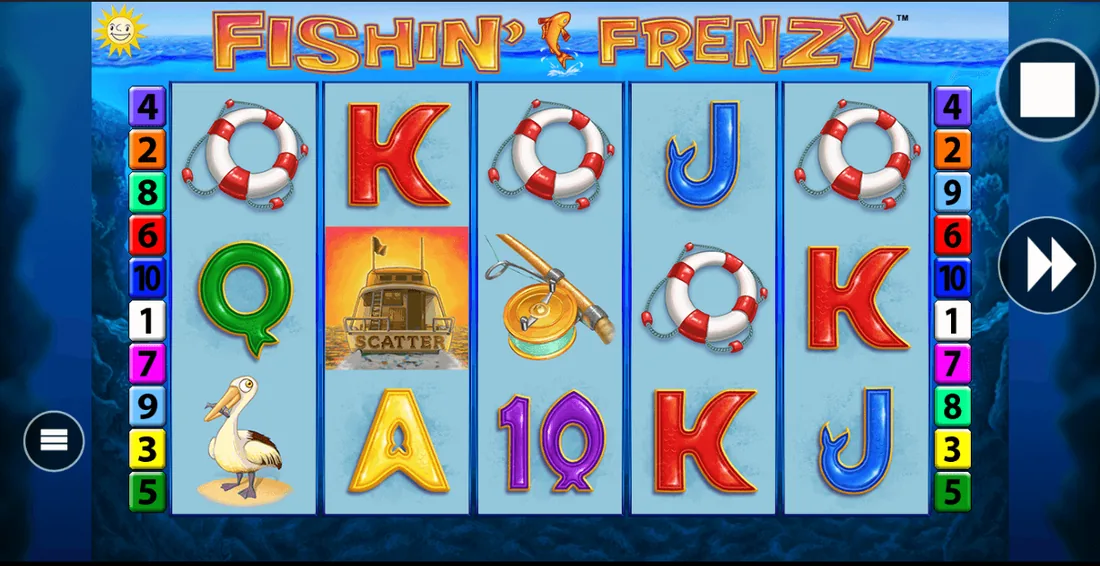
Blueprint Gaming's Fishin' Frenzy runs at 96.12% return to player, medium volatility, and a stake range of 10p to £5 per spin. The game launched in 2014, became one of the most-played slots in British arcades and online casinos, and spawned a dozen sequels. This page walks through the original: what happens in your first ten spins, how the free-spins round works, and what to expect after a week of sessions.
The mechanic is simple—five reels, ten paylines, a fisherman wild that multiplies prizes by 10× during free spins—but the rhythm is what made it stick. You'll hit small wins every few spins, wait twenty to sixty spins for the bonus, then watch the fisherman collect every fish symbol on screen. Understanding that cadence, and the maths underneath it, is the difference between treating it as entertainment and chasing losses you won't recover.
The First Ten Spins: What You're Actually Buying
You land on the game, set a stake—say 50p—and press spin. The reels stop. You see a pelican on reel one, two fishing rods, a tackle box. Nothing lines up. Stake gone. Spin two: three lifebelt symbols scattered across the grid, two rods on a payline. You win 20p. Spin three: blank. Spin four: four pelicans on a line, 80p back. By spin ten, you've won on three spins, lost on seven, and your £5 is now £4.20.
That's medium volatility in practice. Wins arrive often enough to feel like the game is giving something back, but they're usually smaller than the stake. The maths is working exactly as designed: 96.12% RTP means the game is programmed to return £96.12 for every £100 wagered over millions of spins. Your first ten spins are a tiny, statistically meaningless sample, but the pattern—frequent small wins, occasional dry runs—will repeat.
The game uses a random number generator certified by an independent testing lab; Blueprint holds licences in every regulated market it serves. The outcome of each spin is decided the moment you press the button, and the reels spin to show that result. There is no pattern, no hot or cold machine, and no way to predict when the bonus will land.
The Bonus You're Waiting For: Free Spins and the Fisherman
Three or more scatter symbols—blue-and-white lifebelt icons—trigger ten free spins. The backdrop changes from harbour to open water, and a fisherman wild appears on reel three. Every fish symbol that lands during the free spins is collected by the fisherman and paid out at 10× your total stake.
Example: you're playing at £1 per spin. You land the bonus. On free spin two, four fish symbols appear. Each fish is worth £10 (10× your £1 stake). You collect £40 from that single spin, and you still have eight spins left. If no more fish land, you leave the bonus with £40. If six more fish appear across the remaining spins, you add another £60. The maximum win during the feature is capped at 5,000× stake—so £5,000 if you were betting £1, or £500 if you were betting 10p.
- Free spins cannot be retriggered; you get ten, then you're back to base game.
- The fisherman wild substitutes for all symbols except the scatter.
- Fish symbols pay nothing in the base game—they're decoration until the bonus.
- The feature hit rate is roughly 1 in 96 spins, though variance means you might wait 200 spins or hit it twice in 50.
This is where the game's appeal lives. The base game is slow, low-drama, dotted with 20p and 40p wins. The free spins are the payoff: infrequent, but capable of returning 50× to 200× your stake if the fish land. It's that contrast—boredom interrupted by adrenaline—that keeps players spinning.
The First Hour: Sixty Spins, One Bonus, and the Real Cost
Assume you're playing at 50p per spin, ten spins a minute, for one hour. That's 600 spins and £300 wagered. At 96.12% RTP, the expected return is £288.36, so a £11.64 loss over the session. In practice, your result will be noisier. You might hit the bonus twice and finish £30 up, or miss it entirely and drop £40.
| Scenario | Spins | Bonuses hit | Total wagered | Est. return | Net |
|---|---|---|---|---|---|
| Conservative | 600 | 1 | £300.00 | £285.00 | −£15.00 |
| Lucky | 600 | 2 | £300.00 | £320.00 | +£20.00 |
| Dry run | 600 | 0 | £300.00 | £270.00 | −£30.00 |
The first hour teaches you the game's tempo. You'll learn how long a typical bonus-drought lasts, how often small wins arrive, and whether you enjoy the wait. Some players find the rhythm meditative; others find it tedious. Neither reaction is wrong—it's a question of whether you value the anticipation or resent the grind.
The First Week: Pattern Recognition and the Illusion of Control
By day three, you've played a few thousand spins. You've hit the bonus four or five times. One paid £60, another paid £12, the rest were somewhere in between. You've noticed that the fisherman doesn't always fill the screen with fish—sometimes he collects two, sometimes ten. You start to wonder if there's a pattern: does the bonus pay better in the evening? After a losing streak? When you switch stake?
There isn't. The RNG doesn't track time of day, your recent results, or your emotional state. Each spin is independent. The reason you feel a pattern is that humans are wired to find one, even in noise. You remember the bonus that hit after a dry spell because it felt like a reward; you forget the three that came in quick succession because they didn't fit the narrative.
The danger in the first week is that the game starts to feel predictable. You think you can sense when the bonus is due, or that a higher stake will shake it loose. Neither is true, and acting on that belief is how a £20 budget becomes £100. The game's maths doesn't bend. If you've lost £50 over four sessions, the next session does not owe you a win.
- RTP is calculated over millions of spins; your sample size is too small to draw conclusions.
- Volatility means long losing streaks are mathematically normal, not evidence of a fault.
- The bonus frequency is a probability, not a guarantee—1 in 96 spins is an average, not a countdown.
How Fishin' Frenzy Sits in the Blueprint Catalogue
Blueprint released Fishin' Frenzy in 2014, then followed it with Megaways, Jackpot King, and Prize Lines editions. The original remains the most-played, partly because of familiarity, partly because the low-complexity mechanic suits casual sessions. There's no cascading reels, no multi-level progressives, no gamble feature. You spin, you wait for three scatters, you collect fish. That simplicity is the product.
Compared to Megaways slots—117,649 ways to win, cascades, unlimited multipliers—Fishin' Frenzy is sedate. The max win is lower (5,000× versus 10,000× or 50,000× on high-volatility games), the bonus is less frequent, and the base game is less eventful. But it's also less punishing. A hundred spins on a Megaways slot can drain your balance in minutes; a hundred spins on Fishin' Frenzy feels survivable.
If you're new to slots, the original is the better starting point. If you've played it for months and want more volatility, Megaways or Prize Lines will deliver it.
Mobile, Desktop, and Where You'll Find It
Fishin' Frenzy runs in-browser on mobile and desktop; no download required. The interface adapts to portrait and landscape, though portrait is tighter—the paytable and settings are tucked behind menus, and the reels dominate the screen. On a phone, you'll be tapping a spin button rather than clicking a mouse, but the maths and timing are identical.
Blueprint games are available at most UKGC-licensed casinos. You'll find the game under slots, often in a Blueprint or «popular» filter. Demo play is common, but many operators restrict it to logged-in, age-verified accounts. You won't need to deposit to try it, but you will need to prove you're over 18.
- Check the operator holds a UKGC remote gambling licence—number in the footer, name in the public register.
- Stake caps apply: £5 per spin for players 25 and over, £2 per spin for 18–24s.
- First deposit triggers affordability checks if you pass £150 net in a month; open banking or payslips may be requested.
- GAMSTOP is the national self-exclusion scheme; one registration blocks every licensed site.
Real-money play requires a debit card, PayPal, or open banking. Credit cards have been banned for gambling since 2020. Withdrawals by Faster Payments usually arrive same-day or next working day; the first withdrawal takes longer because the operator must verify your identity and address. Expect to upload a passport or driving licence and a recent bank statement or utility bill.
What to Do Before the First Spin
- Decide how much you're comfortable losing. Treat it as the cost of entertainment, not an investment.
- Set a deposit limit in your account settings. UKGC operators must offer daily, weekly, and monthly limits.
- Try demo mode first. Play 200 spins at 50p (notional) and watch how often wins arrive, how long you wait for the bonus, and whether you enjoy the rhythm.
- Learn the paytable. Tap the «i» icon and read which symbols pay what, how the fisherman wild works, and what triggers free spins.
- Check the RTP. 96.12% is the standard version; some operators offer a lower-RTP variant (94% or 92%). The game info screen will state it.
- Understand volatility. Medium means frequent small wins and occasional larger bonus pays. You'll have losing streaks, but they'll be shorter than on high-volatility games.
- Set a session budget and stick to it. If you've allocated £20, stop when it's gone. Chasing losses is how £20 becomes £200.
FAQ
Can I play Fishin' Frenzy for free without signing up?
Some UKGC-licensed operators allow demo play without an account, but most require you to register and verify your age first. You won't need to deposit, but you will need to prove you're over 18. Blueprint does not host a free-play version on its own site.
How often does the free spins bonus actually hit?
The published frequency is roughly 1 in 96 spins, but that's an average over millions of rounds. In practice, you might wait 200 spins or hit it twice in 50. Variance is built into the design; long droughts are mathematically normal, not evidence of a fault.
Why do some casinos show a different RTP for the same game?
Blueprint offers Fishin' Frenzy in multiple RTP configurations: 96.12%, 94.00%, and sometimes 92.00%. The operator chooses which version to offer. The RTP is always disclosed in the game's info screen—check before you play, because a 4% difference compounds quickly.
Is there a way to trigger the bonus more often or make it pay better?
No. The RNG decides every outcome the moment you press spin, and it does not track your balance, recent results, or stake changes. Raising your bet does not make the bonus more likely; switching from manual to autoplay does not affect frequency. The maths is fixed.